Commercial Metal Roof Repair
Screws, laps, rust, trim, and skylight panels on exposed-fastener steel roofs.
Repair the metal roof
Tumacacori-Carmen commercial roof repair for metal farm buildings and shops, where screws back out, laps dry up, and rust starts at the cut edges.

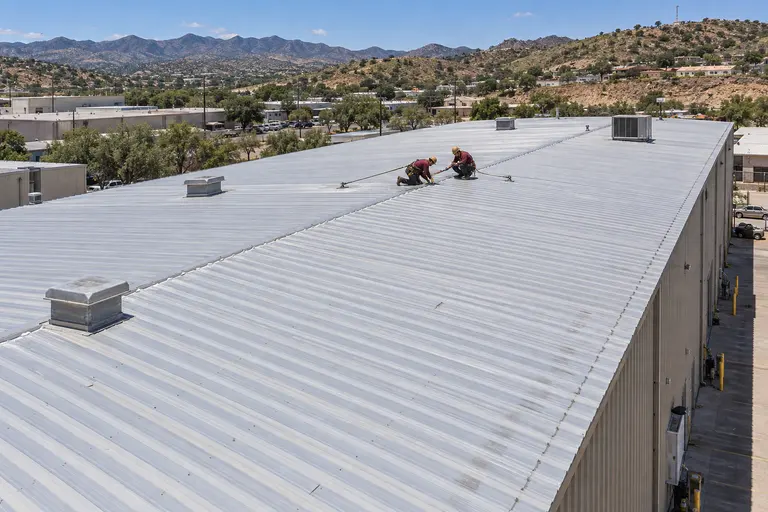
Barns, equipment sheds, and packing buildings around Tumacacori-Carmen are mostly steel panels held on with exposed screws. Every hot day and cold night moves those panels a little.
Over the years that movement loosens screws and cracks their rubber washers. Rust follows at the holes, the cut edges, and the gutters. Catching it while the steel is solid keeps the repair to screws, laps, and spot treatment.
Metal farm buildings fail at a few predictable points. Each row starts with what you see from the floor.
Screws backed out of the ribs along one purlin, each with a cracked washer.
Replace every loose screw on that line with an oversized fastener and new washer.
Rust bloom at screw heads and cut edges where the factory coating has worn through.
Brush to clean steel, prime the spots, and coat the treated area.
End laps whose sealant has dried and shrunk, letting wind-driven rain under the upper panel.
Open and clean the lap, lay new butyl tape, and refasten.
Fiberglass skylight panels yellowed and brittle from years of strong sun.
Replace the panel with a matching rib profile and seal its laps.
The joint where a lower shed roof ties into the main wall, with dried sealant under the flashing.
Reset the transition flashing, seal it to the wall panels, and refasten both edges.
Monsoon wind catching a ridge cap or eave trim with loose fasteners.
Reset or replace the trim and fasten it at closer spacing.
Metal roofs around Tumacacori-Carmen cover equipment, feed, and packing operations that need to stay dry.
Tractors, tools, and wiring under a dripping lap rust and short out. Resealing the lap ends the drip.
A screw replaced while the panel is solid costs far less than a panel rusted through around the hole.
New skylight panels restore the light that brittle, yellowed fiberglass had blocked, and close the cracks.
Feed, boxes, and packing material stay dry once every lap and screw hole over the storage area is sealed.
Metal farm and shop buildings here mostly need metal roof repair, with industrial repair for packing buildings that carry equipment.
Screws, laps, rust, trim, and skylight panels on exposed-fastener steel roofs.
Repair the metal roof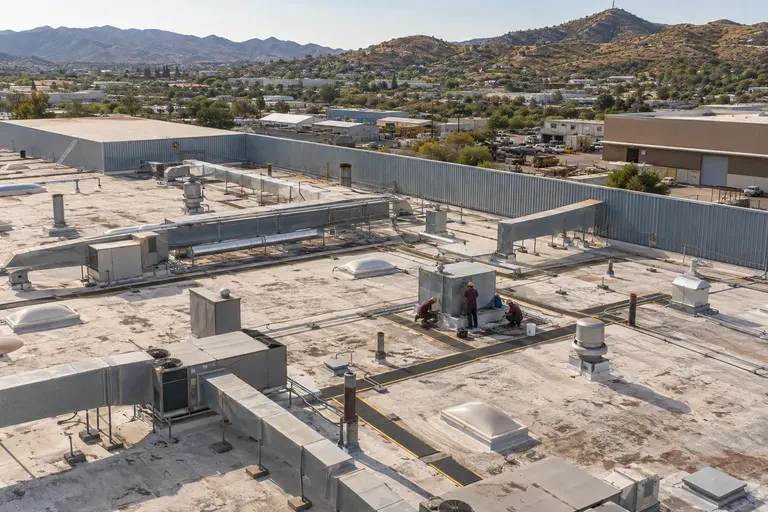
Packing and processing buildings with fans and coolers on the roof need curb and penetration work.
Repair a packing building roofA walk along the ribs shows how many fasteners need replacing. Request an estimate and we will count them.
Work runs panel by panel, with the floor below kept clear. Inspect Your Roof comes first.
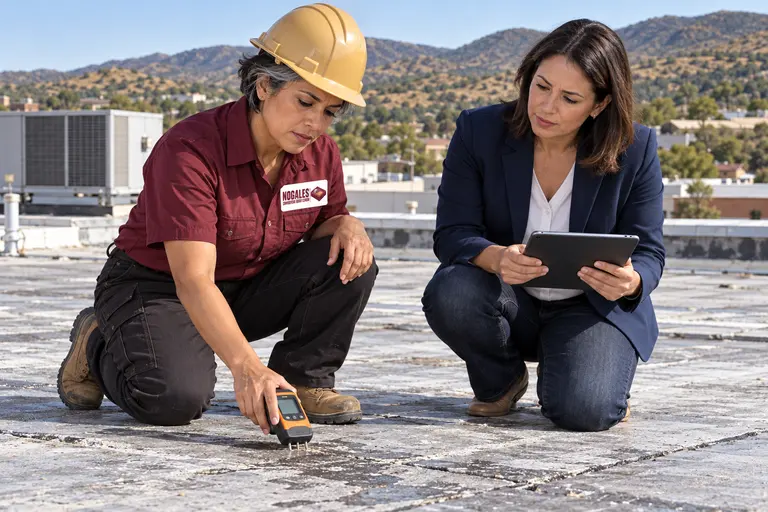
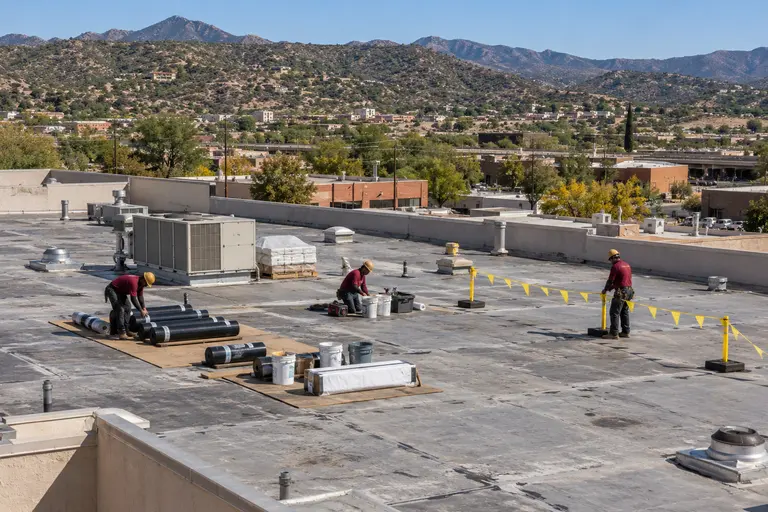
We walk the ribs, test screws for movement, and mark rusted heads, open laps, and cracked skylight panels.
Equipment and stock under open skylights and active work get moved or covered before anyone goes up.
Fall guards go over open skylights near the work, and tools stay tethered on the slope.
Loose fasteners come out for oversized ones; dried laps get cleaned and resealed with butyl tape.
After rain we look up from inside for daylight or drips at each repaired lap and send photos.
Often, yes. Fiberglass panels on steel buildings yellow, crack, and turn brittle under strong sun, and their lap sealant dries out. Small cracks and failed sealant can be fixed in place. A panel that crumbles around its fasteners or has hail holes gets replaced with one that matches the rib profile, with fall guards over open skylights while we work.
The community is unincorporated, so larger roof work goes through the Santa Cruz County Building Department. Fastener and lap repairs usually need no permit.
It varies with age and exposure. Roofs facing the afternoon sun and prevailing wind lose more. We count loose and rusted screws during the inspection, so the estimate reflects your roof rather than a guess.
Only after the loose rust comes off. Paint over loose rust lifts within a season. Brushing to clean steel and priming first makes the coating hold.
Yes, when the building serves a commercial operation: equipment storage, packing, feed, or a shop. Repairs are the same screws, laps, trim, and panels.
Often it is condensation forming on the underside of the panels. We check whether drips follow rain or temperature before opening anything.
They can. Gutters full of dust and leaves hold water against the panel ends and eave trim, where rust starts first. Clearing them on each roof walk and treating rust at the gutter line keeps the panel ends solid.
Usually. We measure the rib spacing and height on site and source a matching panel or skylight. Older profiles take longer to find, so we note it in the estimate.
Snug loose fasteners and swap worn washers on spring and fall walks, keep gutters clear, and treat rust spots while they are small.
Tell us about the building and where it drips. We check every screw line.
Leave a name and number and we will call you back about the leak, the seam, or the panel that has you worried.
Or call now: +1 (623) 310-0172