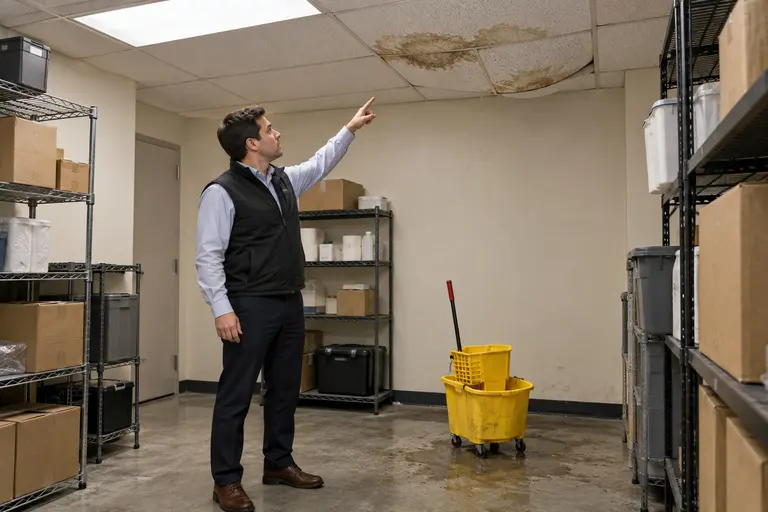
Commercial Roof Leak Repair
When the stain sits far from any seam, leak tracing follows the water path across the deck before anything gets cut.
Trace a hidden leak
Flat roof repair in Nogales for built-up, modified bitumen, TPO, and EPDM roofs. We fix the seams, drains, scuppers, and curb corners where flat roofs leak first.

Most flat roof leaks start where the membrane turns a corner or meets something else. Those spots repair well when the roof around them is still healthy.
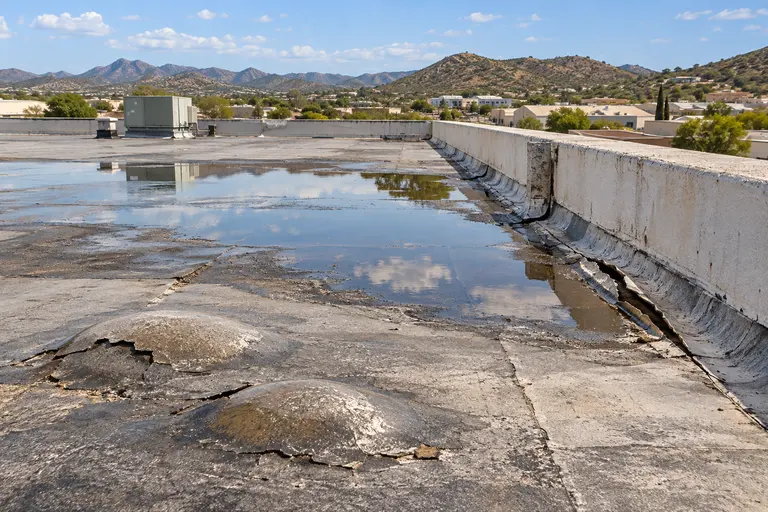
Port-area warehouses and older downtown buildings tend to fail at the same five transitions. Each row starts with what you notice first.
A field seam or lap opened by daily heat and cold, letting water run down the deck.
Clean back to bonding surface and reseal or reweld the lap with matching membrane.
Loose clamping ring or a bowl clogged with dust, so water backs up under the membrane edge.
Reset the clamping ring with new sealant, clear the strainer, and strip in the membrane edge.
Scupper box packed with dust and monsoon debris, or its flashing cracked where it passes through the wall.
Clear the box, reseal the through-wall flashing, and rebuild the membrane wrap around it.
Split corner flashing on the equipment curb, worn by heat cycles and service crews kneeling there.
Install new corner patches or a full curb wrap tied into the field membrane.
Cracked parapet coping or loose counterflashing sending water behind the base flashing.
Seal coping joints, refasten counterflashing, and repair the base flashing below it.
The repair depends on what failed and how much of the roof around it is still bonding.
| Repair | What It Fixes | When It Is The Right Call |
|---|---|---|
| Seam reweld or reseal | Opened laps on TPO, EPDM, or mod bit | The membrane beside the lap is still flexible |
| Drain rebuild | Loose clamping rings and backed-up bowls | Ponding stays near one drain and the deck is firm |
| Curb flashing wrap | Split corners at HVAC and condenser curbs | Leaks appear beside rooftop equipment |
| Blister cut and patch | Raised, cracked blisters on built-up roofs | A handful of blisters, with dry insulation below |
A small opening in a flat roof lets in more water than it looks. Closing it early protects what sits below.
Each rain through an open lap wets more board. Resealing that lap now keeps the repair to one seam instead of a section.
A reset clamping ring lets the drain take water again, which ends the ponding ring that ages membrane around it.
Warehouses near the port keep produce on pallets under the roof deck. A sealed curb corner keeps drips off boxes and forklift lanes.
Older downtown buildings show water at the parapet wall first. Sealing coping joints saves plaster and tile inside.
Standing water around a drain after a storm usually points straight at the leak. Call and describe where it sits.
Roof work and building coordination happen side by side. Inspect Your Roof always comes first.
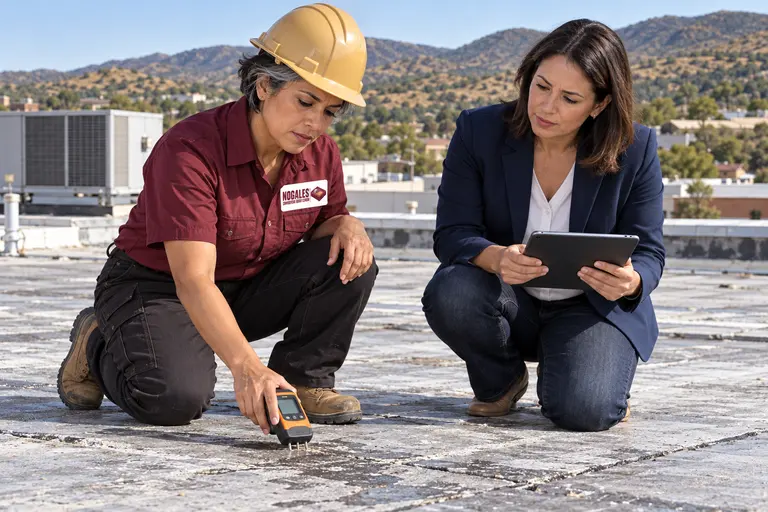
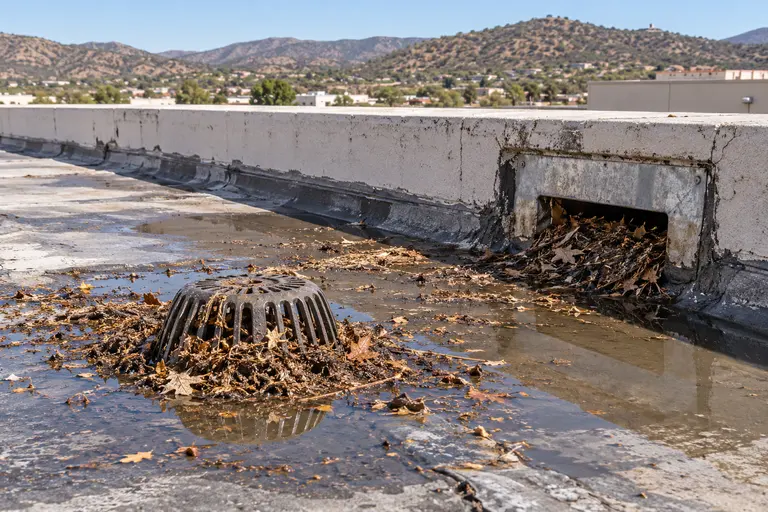
We probe every lap near the leak, check drains and curb corners, and take moisture readings to map how far water spread.
Stock under the leak gets moved or covered, and we mark where ladders and material staging sit outside the building.
Dirt, old mastic, and loose surfacing come off until the membrane is clean enough for a new bond.
Matching membrane goes on: welded for TPO, taped for EPDM, plies or torch-down for built-up and mod bit roofs.
The ceiling under the repaired seam gets checked after the next rain, and you receive dated photos of each repaired transition.
When a flat roof leak is hard to find, or the roof carries heavy equipment, these services pick up where a seam repair ends.
When the stain sits far from any seam, leak tracing follows the water path across the deck before anything gets cut.
Trace a hidden leak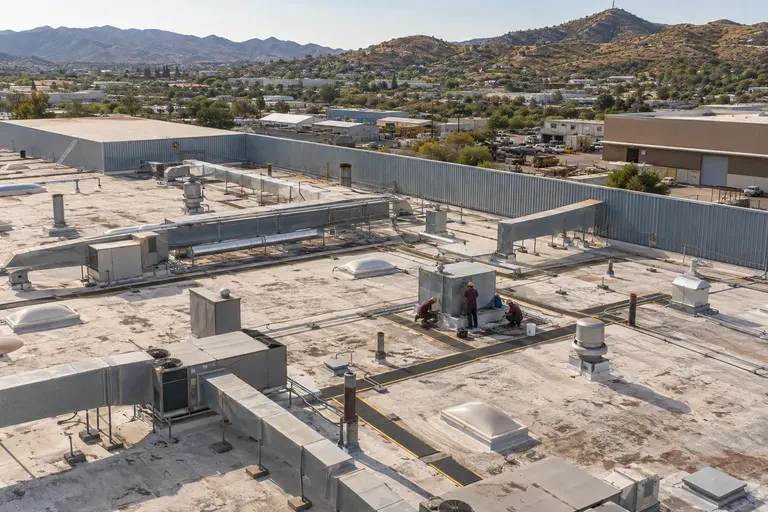
Flat plant roofs crowded with condensers and fans need curb and penetration work planned around production.
Repair a plant roofAt transitions, where the membrane turns a corner or meets something else. On port-area warehouses and older downtown buildings, we check field seams opened by heat and cold, drains with loose clamping rings, packed scuppers, split curb corners, and cracked parapet coping. A ponding ring near a drain often points straight to the source.
Yes, when a building has both, such as an addition with a different membrane. Each gets its own repair method: TPO seams are hot-air welded, EPDM seams use seam tape and primer. The tie-in between the two gets a transition detail.
A raised blister gets cut open, dried, and patched with plies that match the roof. If the insulation under it reads wet, that board comes out first. A field covered in blisters is a sign the roof is near replacement.
Usually not. Ponding near one drain often comes from a clogged strainer or a drain set high after past repairs. Clearing and resetting the drain is the first step; a cricket or tapered insulation comes up only if water still stands.
Yes, with work planned for the cooler morning hours. Membrane gets very hot by afternoon, which affects how adhesives set and how long crews can work safely on the roof.
A few open laps or one curb usually take a single visit. Larger sections, or repairs that need wet insulation removed, take longer and get scheduled around your building.
Look at drains and scuppers for packed debris, edges and corners for lifted membrane, and ceilings for new stains. Photos before anything is moved help if you file an insurance claim.
Tell us where the water shows and what the roof is made of. We inspect it and recommend the fix.
Leave a name and number and we will call you back about the leak, the seam, or the panel that has you worried.
Or call now: +1 (623) 310-0172