Commercial Roof Leak Repair
Temporary control after the storm, then tracing and repair of every opening the wind created.
Stop a storm leak
Amado commercial roof repair for I-19 roadside buildings, starting with photos of storm damage for your insurer before anything is moved or patched.

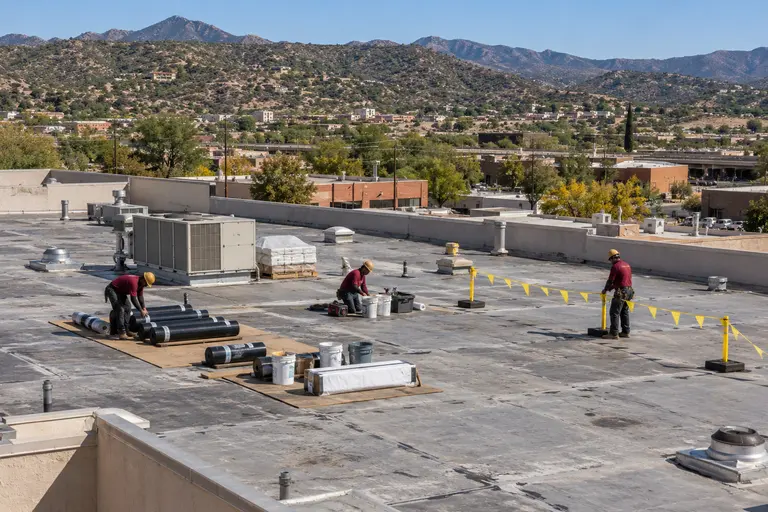
Roadside buildings in Amado sit on open ground along I-19, where monsoon gusts reach the roof edge with nothing to slow them. Peeled edge metal and torn corners are common after a big storm.
Before anything gets moved or patched, the damage gets photographed wide and close, with the storm date. Then the opening is covered, and the permanent repair follows once the insurer has what it needs.
Storm damage on open ground follows the wind. Each row starts with what an owner finds after the storm.
Gusts catching a loose edge and rolling the metal back along the roof perimeter.
Photograph it, cover the exposed edge, then replace the edge metal and refasten it at closer spacing.
Wind lifting the membrane where edge fastening was weakest, often at the building corners.
Cut back to membrane that still sticks and install a corner patch tied into the new edge.
Storm debris, grit, and plant matter blown into the outlets and backing water up.
Clear each outlet and check the flashing around it for tears.
Hail or wind-blown debris striking fiberglass skylight panels on metal sections.
Photograph the marks, cover the panel, and replace it with a matching profile.
Screws pulled loose by gusts on the windward side of a metal roof or wall.
Replace the loose screws with oversized fasteners and check the panel laps around them.
Water that got in through the torn edge spreading under the membrane during the storm.
Moisture readings map the wet area so soaked board can be replaced with the repair.
Roadside buildings in Amado serve travelers and local business, and a storm-damaged roof puts both on hold.
Dated photos of the roof taken before the cleanup show the damage as the storm left it, which your adjuster can review.
A temporary cover over the torn edge keeps the next storm out while the claim is reviewed.
Moisture readings after a storm catch soaked insulation that would otherwise cause leaks months later.
Edge and corner repairs happen from the roof, so a roadside business keeps serving customers.
Storm work in Amado usually means leak repair first, and metal roof repair where panels or trim were damaged.
Temporary control after the storm, then tracing and repair of every opening the wind created.
Stop a storm leak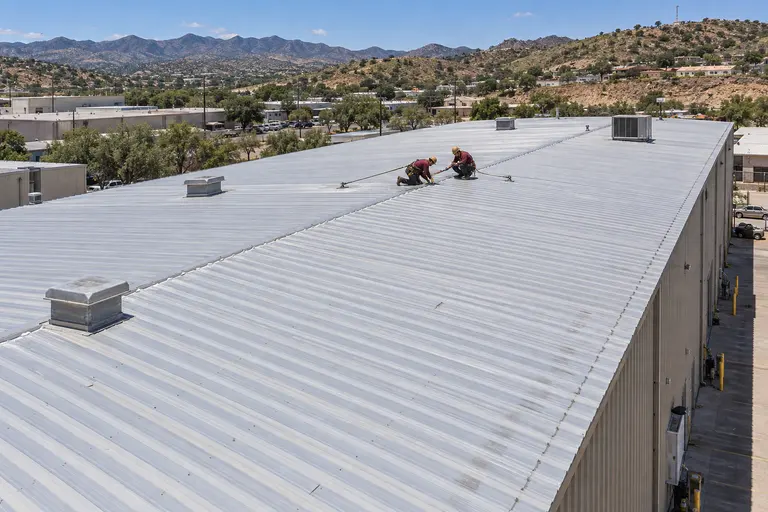
Lifted ridge caps, eave trim, and cracked skylight panels on metal buildings along I-19.
Repair storm-damaged metalTake photos first, then call. We document the roof and cover any opening before the next storm.
Documentation, temporary cover, and the permanent repair happen in that order. Inspect Your Roof comes first.
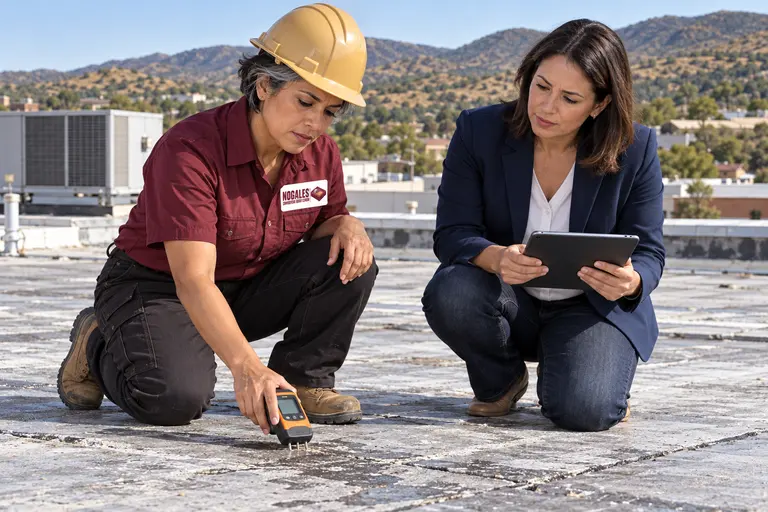
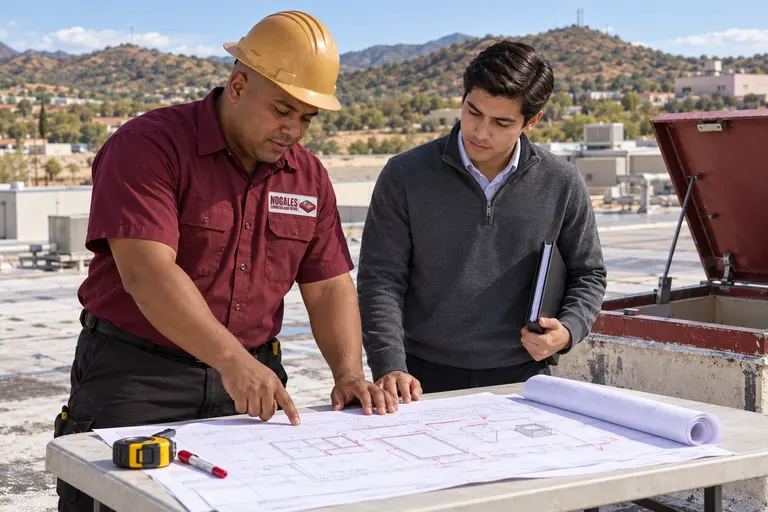
We walk the edges, corners, outlets, and skylights and photograph every damaged area wide and close.
Interior stains get dated photos, and you note the storm date and time for your insurer.
Torn edges and cracked panels get a temporary cover so the next storm stays out of the building.
You call your insurer before permanent repairs; we provide roof photos and invoices for the urgent work.
New edge metal, corner patches, and panels go on once the claim allows, with wet board replaced.
Each neighbor has its own roof problems and permit office.
Parapet shops just south on I-19.
Metal farm buildings further south.
Cold storage close to Nogales.
Storefronts reached by SR 82.
Take photos before anything is moved or patched: wide and close shots of torn flashing, lifted panels, or hail marks, plus dated pictures of interior stains. Write down the storm date and time and keep invoices for temporary leak control. Arizona's insurance regulator also advises calling your insurer before permanent repairs. Coverage decisions belong to your insurer.
Amado sits on the Santa Cruz and Pima county line. The parcel record decides it: Santa Cruz County Building Department, or Pima County Development Services for Pima parcels.
Yes. A temporary cover keeps water out and is usually expected; photos taken first show the damage as the storm left it.
The National Weather Service in Tucson notes that Arizona thunderstorm gusts nearly always pass 40 mph, and the strongest downbursts can top 100 mph. Open sites along I-19 take the full force.
Roof edges and corners, where wind lifts the edge metal and then the membrane. Loose trim on metal buildings is next.
After any severe storm, yes, from the ground or a safe access point. Look for peeled edges, debris in outlets, and new interior stains, and call if you see any.
Not always. Cracked skylight panels and dented units are easy to see, but bruised membrane can start leaking months later. A roof walk soon after a hailstorm, with photos, gives you a record if leaks appear later.
Leave the roof walk to a roofer. Wet membrane is slippery, torn edges can give way, and debris hides holes. From the ground or a window, photograph what you can see and note new stains inside, then call.
Yes. We document roof conditions with dated photos of each damaged area. Coverage decisions stay with your insurer.
Tell us when the storm hit and what you found. We document and repair it.
Leave a name and number and we will call you back about the leak, the seam, or the panel that has you worried.
Or call now: +1 (623) 310-0172